
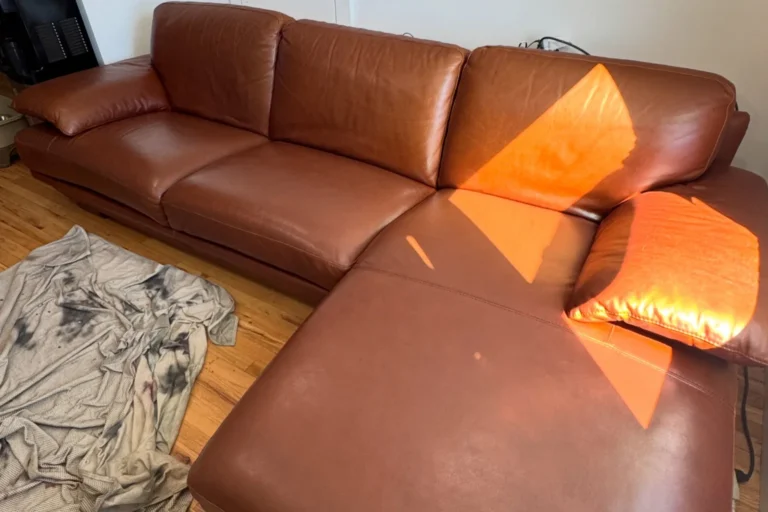
Seattle is not known for harsh sun, so many owners are surprised when their leather couch starts to crack, fade and lose its finish after a few years. The cause is usually not the weather outside but the conditions inside: months of forced-air heating, a favorite seat that gets used every evening, a dog that claims the chaise and a few summer weeks of strong afternoon light. The good news is that most of this wear can be repaired in place, without moving the couch out of the house.
This guide covers what leather couch repair in Seattle can fix, how an in-home repair works, what to expect from a quote and how to keep the leather in shape afterward.
From October to April, most Seattle homes run the heat for long hours. Forced-air and baseboard heating dry the indoor air, and leather loses moisture along with it. Dry leather stiffens, and the finish on seat cushions and arms begins to crack and flake where the leather flexes most. Couches placed next to a heating vent or a radiator often show this first.
Summer brings the opposite problem. The days are long, and a sofa under a west-facing window can get several hours of direct light every afternoon. Over a few seasons that is enough to fade backs and chaise cushions unevenly, leaving the sunny side noticeably lighter than the rest. Add pets, which are part of many Seattle households, and the usual result is a mix of scratches, worn seats and patchy color.
Most couch damage sits in the color coat and the protective finish, which a technician can rebuild. Common repairs include:
Leather couch repair in Seattle is usually done in your living room. Sectionals and sleeper sofas are heavy, and moving them through Seattle stairwells and condo elevators is more trouble than the repair itself. A typical visit follows the same order:
A single damaged area usually takes one to three hours. Recoloring a full couch or several cushions can take longer or need a second visit.
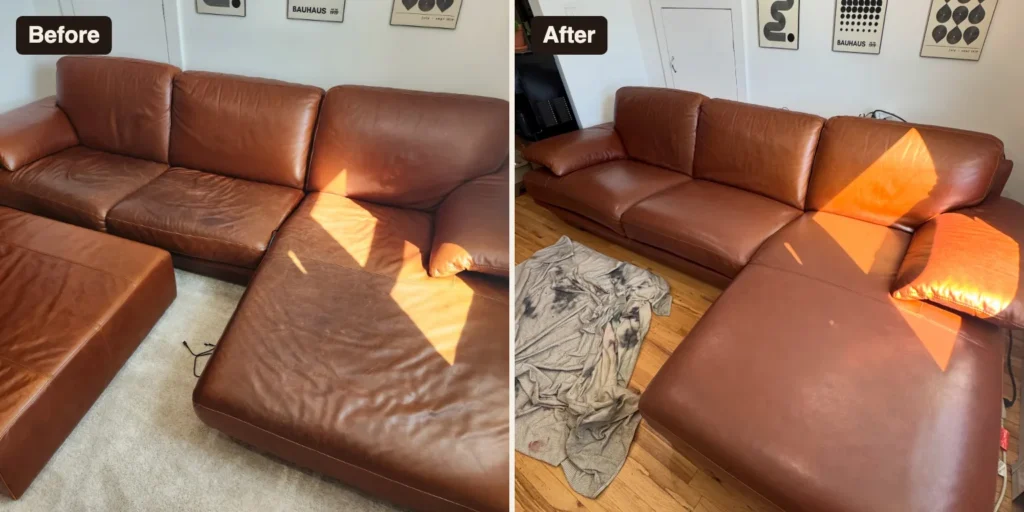
Seattle Leather Repair is a mobile service that handles leather couch and sofa repair in Seattle and nearby cities, including Bellevue, Kirkland and Redmond. The technicians bring their tools and materials to your home and work on everything from single cushions to full sectionals, Chesterfields and Italian leather sofas. Estimates are free and are based on photos you text or send through the website, with a same-day reply. We covered the company’s launch in an earlier article about mobile leather repair in Seattle.
Every couch is quoted individually, and the price depends mostly on the work involved:
For a broader look at how leather repair is priced, see our leather repair price guide.
Repair makes sense when the leather is genuine and still sound, even if it looks tired. Tears can be fixed when the surrounding leather is in reasonable shape, and full recoloring needs leather that is not breaking apart. Faux and bonded leather that is peeling heavily is a different case: the coating is failing across the whole surface, so a technician should tell you honestly whether a repair or re-covering is the better choice.
For a step-by-step routine, read our guide on how to care for leather goods. The same techniques for removing light scratches also work on small marks on a couch. If you also have a home in Southern California, see our guide to leather couch repair in San Diego.
Yes, as long as the leather underneath is still solid. The cracks are filled, the surface is smoothed and recolored, and a topcoat seals the repair.
No. Mobile technicians do the work in your home and bring everything they need.
Most single-area repairs take one to three hours. Full recoloring or several cushions may take longer or need a second visit.