A scratch on a leather bag looks worse than it usually is. Most marks sit in the top finish or in the oils near the surface, and those can be blended at home in a few minutes. The trick is knowing which kind of leather and which kind of scratch you are dealing with before you reach for any product. This guide shows you how to remove scratches from a leather bag safely, and where home repair should stop.
First, identify your leather
The same scratch needs a different fix on different leathers. Check the care card or the brand’s product page, then compare with this list. If you are unsure, our guide to the types of leather used in handbags explains how to tell them apart.
Finished (pigmented) leather. Even color, light sheen, water beads on the surface. This is the most common handbag leather and the easiest to repair.
Aniline and semi-aniline leather. Soft, matte, natural-looking. It absorbs water and oils quickly and marks easily, but light marks also blend easily.
Vachetta and vegetable-tanned leather. Pale, untreated trim and handles that darken with age. Scratches fade into the patina over time.
Saffiano, embossed and coated leather. A textured, scratch-resistant coating. It rarely scratches, but when it does, the mark is in the coating itself.
Suede and nubuck. A brushed, velvety nap. “Scratches” are usually flattened fibers.
Patent leather. A glossy, glass-like coating that shows scuffs and color transfer.
How deep is the scratch?
Run a fingertip across the mark and look at it in daylight.
Surface scuff. You can see it but barely feel it, and the color underneath is unchanged. This is a home fix.
Scratch with color loss. The mark is lighter than the leather around it because the pigment has been scraped away. This can often be improved at home with a color-matched product.
Cut or gouge. Your nail catches, fibers are raised or the leather is torn. This needs filler and refinishing, which is professional work.
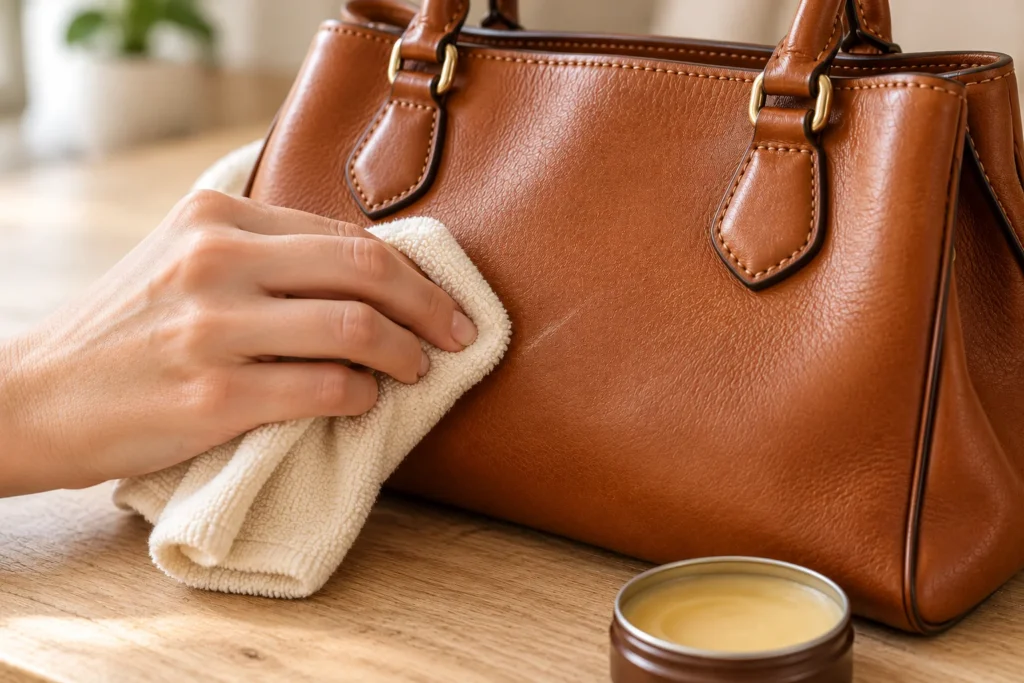
Light scuffs often blend with gentle rubbing and a little conditioner.
For color loss: a color-matched leather balm or recoloring cream
For suede and nubuck: a suede brush and suede eraser
How to remove light scratches and scuffs
Clean the area. Wipe off dust and grit with a dry cloth, then use a small amount of leather cleaner. Dirt rubbed into a scratch makes it permanent. If the whole bag needs attention, follow our steps for cleaning a leather bag at home first.
Rub with a clean fingertip. Use small circles and light pressure for 20 to 30 seconds. The warmth moves the oils and waxes in the leather back into the mark. On aniline and vegetable-tanned leather this alone often does the job.
Test your conditioner. Apply a drop somewhere hidden, such as under a flap or on the base, and wait until it dries. Some leathers darken.
Condition the scratch. Put a pea-sized amount on a cloth and work it into the mark and a little beyond it, so the edges blend.
Let it absorb, then buff. Wait 10 to 15 minutes and buff with the second cloth.
Check the next day. Leather keeps settling for several hours. Repeat once if the mark is still visible.
How to fix deeper scratches with color loss
When the scratch is paler than the bag, conditioner will soften it but will not bring the color back. You need pigment.
Choose a leather balm or recoloring cream that matches your bag. If you are between two shades, go slightly lighter and build up.
Test it on a hidden spot and let it dry fully. Color looks different wet.
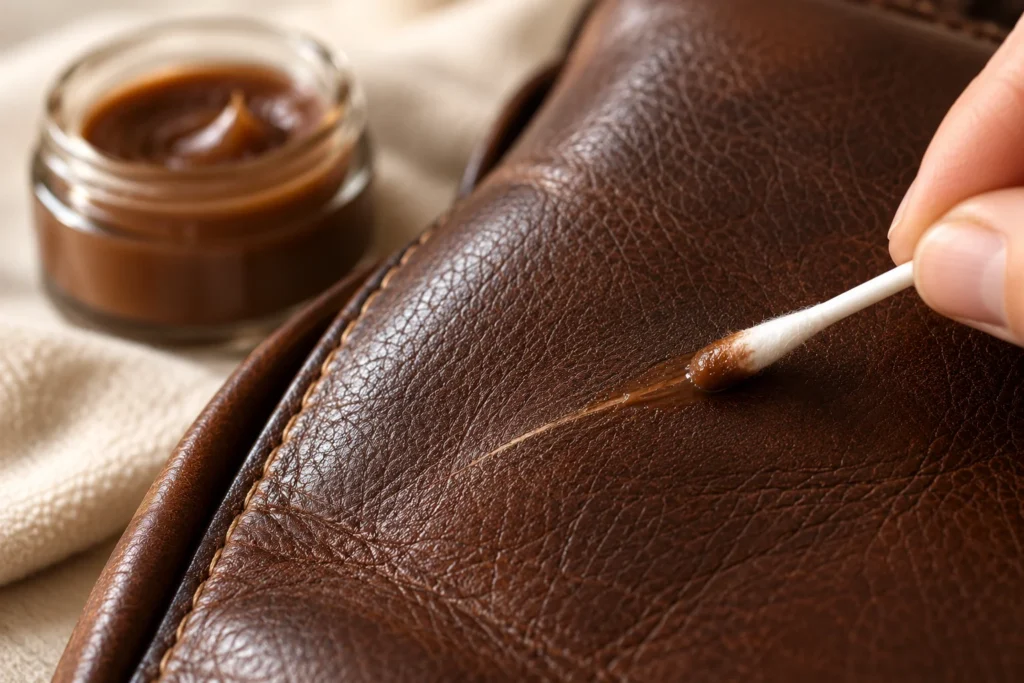
Dab a very thin layer into the scratch with a cotton swab or sponge. Feather the edges.
Let it dry, then add another thin layer if needed. Two or three thin layers look better than one thick one.
Buff gently and finish with conditioner after 24 hours.
This works well on black, brown and tan. Bright, pastel and metallic shades are hard to match from a jar, and a poor match is more visible than the scratch was.
Thin layers of color-matched balm restore pigment in deeper scratches.
Scratch fixes by leather type
Finished leather: clean, condition, then use colored balm if pigment is missing.
Aniline: fingertip rubbing first. Use conditioner sparingly, because it can leave a darker patch.
Vachetta: rub with a clean, dry finger and leave it alone. Avoid water and creams, which stain. The mark will blend as the leather darkens.
Saffiano and coated leather: wipe with a damp cloth to remove any transfer. A true scratch in the coating cannot be buffed out and needs a professional touch-up.
Suede and nubuck: lift the nap with a suede brush, working in one direction, then use a suede eraser on what remains.
Patent: a soft cloth and a patent cleaner remove scuffs. A scratch through the gloss layer is generally permanent.
What not to do
Olive oil, coconut oil or petroleum jelly. They darken leather unevenly, attract dirt and can turn rancid.
Shoe polish. It is made for shoes and can rub off on clothing.
Markers and nail polish. The color never matches and the result is hard to undo.
Melamine sponges. They are a fine abrasive and remove the finish along with the mark.
Hair dryers. Heat dries and shrinks leather.
When to see a professional
Take the bag to a specialist if the leather is cut or gouged, the scratch is on a pale, bright or exotic leather, the damage is on a corner or handle that gets constant wear, or the bag is valuable enough that a visible repair would affect its resale price. A restorer can fill the scratch, match the color exactly and reseal the finish. Our leather bag repair price guide covers what to expect, and the guide to professional leather repair explains how the work is done.
How to prevent scratches
Condition the bag every few months. Supple leather resists marks better than dry leather.
Store it in its dust bag, stuffed lightly, and not pressed against buckles or zippers of other bags.
Keep keys and pens in a pouch inside the bag.
Watch rings, bracelets and long nails when you reach in.
Light marks on aniline and vegetable-tanned leather fade as the leather is handled and develops patina. Scratches in finished or coated leather do not change without treatment.
Does leather conditioner remove scratches?
It hides surface scuffs by restoring oils and evening out the sheen. It cannot replace missing color or fill a cut.
Can I use a leather repair kit on a designer bag?
Filler kits are made for furniture and car seats. On a handbag the repair is small and close to eye level, so mistakes show. For anything beyond conditioner and balm, a professional is the safer choice.