
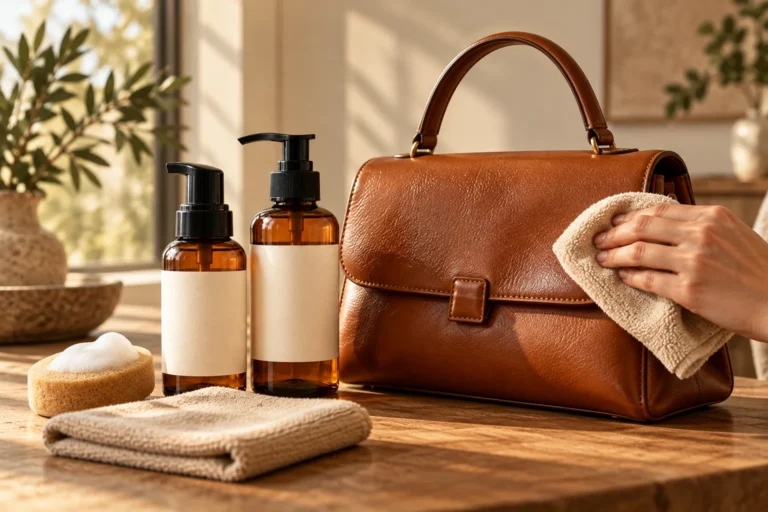
Leather is one of the few materials that can look better after ten years than it did on day one. A handbag develops a soft patina, a jacket moulds to your shoulders, a sofa settles into the shape of your family. But leather is also skin: it dries out, absorbs oils, fades in the sun and cracks when it is neglected. The good news is that caring for it takes far less time than most people think, as long as you use the right products in the right order.
This guide covers the routine we recommend for everyday leather goods — handbags, wallets, shoes, jackets, car seats and furniture — plus the mistakes that do the most damage.
Finished leather is protected by a thin topcoat, but that layer wears down with use. Three things cause most of the damage we see:
A gentle, regular routine prevents all three — and it is far cheaper than repairing a leather bag or recolouring a faded sofa later.
Before you use any product, find out what type of leather you are dealing with. This single step decides what is safe to use:
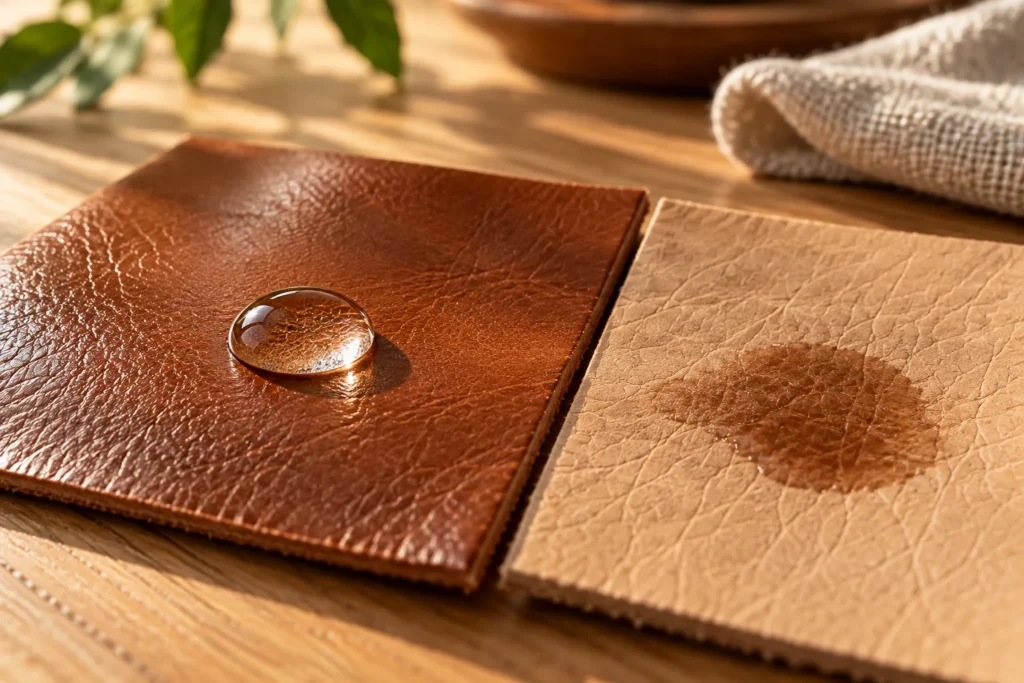
A quick water-drop test helps: if a drop sits on the surface, the leather is finished; if it soaks in and darkens the spot, it is aniline or close to it. The team at Balsamio has written a clear guide on how to identify your leather type, and our own article on the types of leather used in handbags goes deeper into full-grain, top-grain and genuine leather.
The most common mistake is applying conditioner straight onto dirty leather. That simply seals grime into the grain. Professional restorers always work in the same order: clean, let dry, then condition.
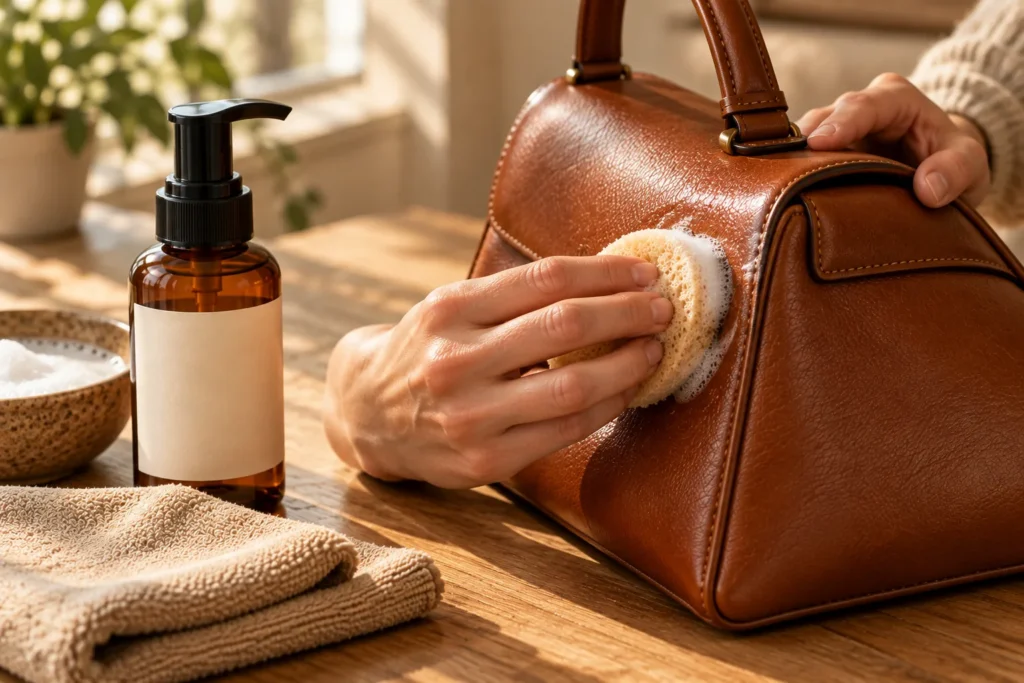
We like products designed specifically for finished leather, such as the Balsamio Leather Cleaner, a foam developed in a leather restoration workshop. For handbags specifically, see our step-by-step guide on how to clean a leather bag at home.
Conditioning puts back the moisture and suppleness that cleaning and daily wear take out. Once the leather is clean and dry:
Choose a non-greasy balm that absorbs fully rather than one that leaves a sticky film — for example, a conditioning balm made for finished and semi-aniline leather. Avoid olive oil, coconut oil and other kitchen remedies: they go rancid, darken the leather and attract dust.
| Item | Clean | Condition |
|---|---|---|
| Everyday handbag or wallet | Every 1–2 months | Every 3–6 months |
| Leather shoes and boots | After wet or dirty wear | Every 2–3 months |
| Leather jacket | Once or twice a season | Once or twice a year |
| Sofa and armchairs | Every 2–3 months | Every 3–6 months |
| Car seats | Monthly in summer | Every 3–4 months |
Items used daily, exposed to sun or kept in dry, heated rooms need care more often. Leather that feels stiff or looks dull is telling you it is time.
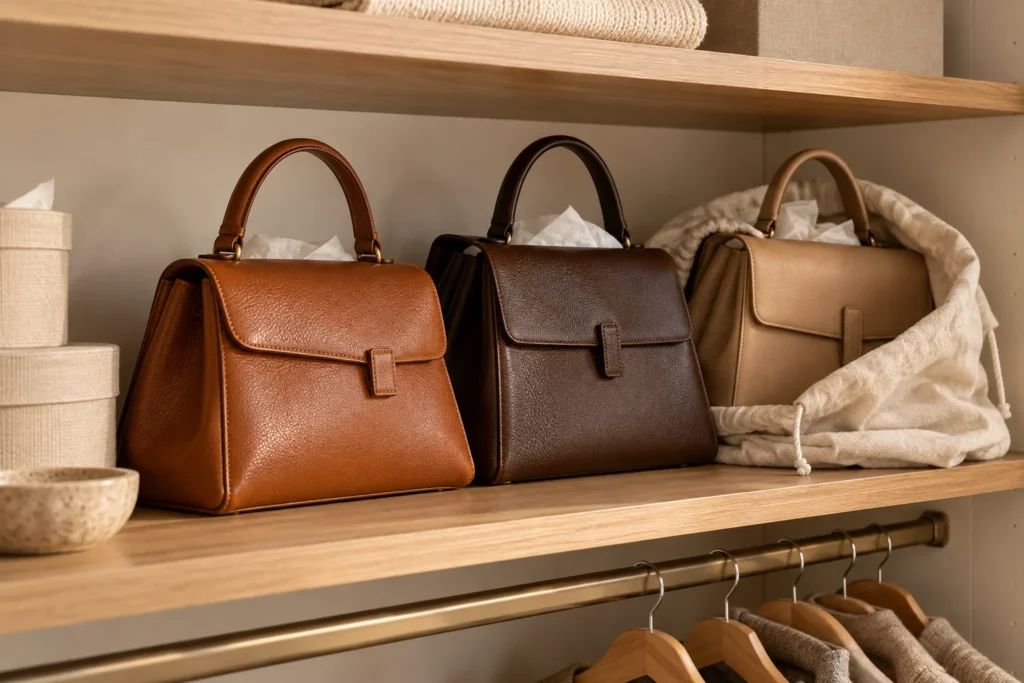
Handles, strap edges and corners take the most wear. Clean them more often than the body of the bag, and never overfill a bag — stretched leather creases permanently. Store bags stuffed with acid-free tissue in a breathable dust bag, never in plastic. Our complete leather bag care guide covers storage in detail.
Brush off dirt after every wear, let wet shoes dry naturally with cedar shoe trees inside, and condition before winter to protect against salt and water stains.
Hang leather jackets on wide, padded hangers to keep the shoulders in shape. Keep them away from direct sunlight, and never put leather in the washing machine or tumble dryer.
Furniture and car interiors take the most abuse: body heat, sweat, sunlight and constant friction. Vacuum the seams regularly, wipe spills immediately and keep furniture at least three feet from radiators and sunny windows. For a detailed walkthrough, Balsamio’s guide on cleaning a leather couch without damaging it is well worth reading.
A home routine keeps leather in good condition, but it will not fix everything. Deep cracks, peeling finish, colour loss, ink stains, torn seams and broken hardware need a specialist with colour-matching and repair tools. If your piece is valuable or sentimental, it is always worth getting a professional opinion — see our guide to finding leather repair near you or browse our repair shop directory.
Good leather care comes down to three habits: know your leather, clean before you condition, and use gentle products made for the job. Fifteen minutes every few months is enough to keep a handbag, jacket or sofa soft, rich in colour and free of cracks for years — and to let it develop the kind of patina that only well-loved leather has.