
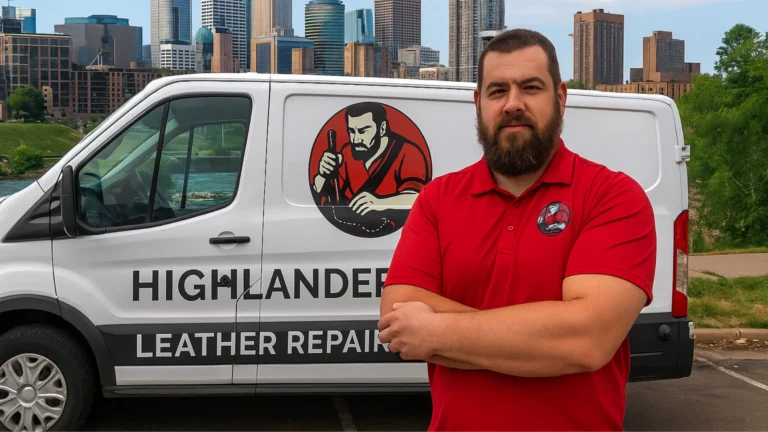
Choosing the right specialist for leather restoration is not as straightforward as hiring a handyman. Leather is a natural material that absorbs dye differently from one area to another, ages in its own character, and reacts uniquely depending on coatings, sunlight, humidity, and wear. If you choose the wrong technician, the results can look patchy, feel plastic, or fail within months.
This guide explains how to find a qualified leather repair professional in Minneapolis, what questions to ask, what to expect during the process, and how to recognize true craftsmanship. It also introduces Highlander Leather Repair, a Minneapolis company that offers a full range of restoration services, including Leather Furniture Repair, Automotive Leather Repair, Commercial Leather Repair, Purse and Handbag Repair, Boat and Yacht Leather Repair, Medical Furniture Repair, RV Leather Repair, and Aircraft Interior Repair.
Many people assume that leather repair means simply wiping the surface with cleaner and adding conditioner. True restoration involves much more:
A skilled technician is part artist, part chemist.
A wrong technique or a cheap repair kit can permanently damage leather. Furniture stores often recommend do-it-yourself kits or general upholstery shops. The problem is that upholstery does not equal leather restoration. Upholsterers can replace fabric, foam, and cushions, but most do not specialize in restoring color, repairing cracks, or refinishing the original leather.
A real leather repair technician understands:
Leather is unforgiving. Once the wrong product penetrates the surface, correcting it becomes expensive or impossible.
Asking the right questions reveals the technician’s experience level:
A confident technician will answer without hesitation.
Some people expect leather to look brand new after a repair, but restoration has limits. A skilled technician will provide a realistic outcome:
The goal of leather repair is improvement and lifespan extension, not perfection. Anyone promising flawless results without seeing the item is either inexperienced or dishonest.
Mobile leather repair is a significant advantage in Minneapolis. Transporting a sofa, car seat, or medical chair to a shop can be costly and inconvenient. High-quality repairs can be performed on-site in most cases.
Mobile service benefits include:
A company offering mobile leather repair demonstrates efficiency and comfort working in various environments—homes, offices, dealerships, boats, RVs, etc.
Avoid technicians who:
\
A true professional sets expectations and explains limitations.
Pricing varies depending on severity, leather type, preparation time, and the amount of dye or filler needed.
Here is a general guideline:
Good leather repair is not cheap, but it is far more cost-effective than replacement.
A professional can achieve exceptional results with:
But tools alone do not create results—experience does. Color matching is an art. Surface prep is a science. Applying coatings evenly requires practice.
Highlander Leather Repair (Minneapolis–St. Paul metro) specializes only in leather and vinyl restoration. They handle everything from furniture and automotive interiors to commercial seating, medical upholstery, purses, RVs, marine seating, and even aircraft interiors. Their approach is focused on preserving the natural look and feel while extending the life of the leather, not masking flaws.
Instead of offering a quick cosmetic fix, they use a step-by-step process: evaluation, prep, color match, reinforcement, dye application, and protective coating. The company also provides mobile service, arriving with all the equipment needed to repair items at your home or business.
When a repair is not recommended—such as damaged natural aniline leather that will not match after refinishing—they are transparent and may advise replacement.
Leather ages gracefully when cared for. Whether it’s a high-end sofa, car seat, medical table, RV dinette cushion, designer purse, yacht seating, or aircraft interior, choosing the right technician protects your investment.
The right expert will:
Selecting a skilled professional ensures your leather looks better, lasts longer, and retains its natural character.
When you want results guided by craftsmanship instead of guesswork, choose a specialist—not a general handyman or upholstery shop.

Your go-to destination for all things handbags and purses — from the latest trends and care tips to leather restoration guides and expert handbag repair shop directories.
Don’t miss our future updates! Get Subscribed Today!
©2025. LeatherBagss.com. All Rights Reserved.